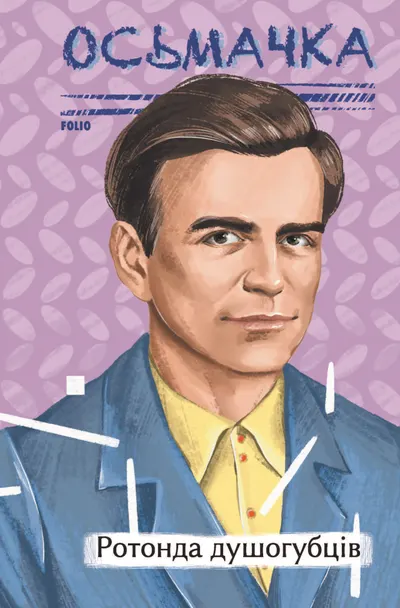
Український огляд нижче (Ukrainian language review is below) The English title of this novel, set in the early 1930s USSR is The Rotunda of the Soul Slayers (1956). I’ve read it now because this year I plan to read more of Ukrainian classics, so I took From Kulish to the present day: 100 iconic novels and novellas in Ukrainian (Ukr) and decided to go through the list as it is composed, i.e. chronologically. This is the #48 in the list. This is a prose work written by a poet, and it shows—it’s full of vivid imagery, a certain sense of delirium, and, at the same time, often rather two-dimensional characters (especially the negative ones), “forgotten” plot lines, and an approach that suggests “a good fantasy trumps facts.” All of this is clearly illustrated in the opening, where Stalin travels from the Kremlin to the round house that gave this novel its title to meet with the executioners who will later be sent to Ukrainian villages. A vivid scene: a huge hall, a small table covered by a large map (of Ukraine) spread out almost across its entire surface; two longer tables on either side, covered with white tablecloths, behind which sit “five soldiers in white uniforms with machine guns, their barrels pointing toward the hall.” Mykola Lygorovych (Yezhov) introduces Stalin to specially selected Ukrainian executioners, briefly recounting how some of them ended up here—among them, Partsyunya, who would later become an important character. Partsyunya had dispossessed his own brother, and, convinced that the latter was hiding gold, arrested him along with his family—including his own mother—and then starved them into killing their own mother… And it is characters like these that Stalin and Yezhov are sending to Ukraine. The goal of this mission is to identify passionate individuals—those who can lead people and resist the authorities—and to prepare for their destruction along with all their descendants. This is, of course, a not-too-subtle allusion to the case of the Union for the Liberation of Ukraine (1930) process as the decapitation of the nation on the eve of the Great Famine (Holodomor) of 1932-33, although the scope here is broader—to find everyone who stands out from the crowd in any way. Partsiunya arrives by plane in the village of Onykiyiv Yar. This is the hometown of the main character—Ivan Brus, a writer who lives in Kyiv. There, Partsiunya meets Comrade Mazdigin, the head of the local party committee and the principal of the seven-year school. Mazdigin is notorious for forcing girls into sexual relationships; at this very moment, he is raping fourteen-year-old Hapusia, the daughter of the impoverished, one-eyed Shelestian. Shelestian shared his misfortune with Partsyunya, but the latter is more interested in Ivan Brus’s father—Ovsiy Yukhimovich Brus, a self-taught veterinarian who “could read both Russian and Ukrainian only by syllables. He couldn’t write at all. He couldn’t even sign his last name. And yet he knew the Latin names of all his medicines by heart,” a man who had saved more than one family in the surrounding villages with his knowledge. He never took money for his services; he might only accept a drink offered in celebration. However, Partsyunya doesn’t believe in such selfless people and is certain that old Brus is hiding gold. He is supported in this by Brus’s other son, Mades, who is trying to curry favor with the new authorities, even at the expense of his father. Mades claims he saw Ovsiy burying something in a tin can in the corner of the house (in reality, it was the poetry written by the younger Brus, who was looking for a place to hide it while he fled abroad, unable to live under a totalitarian system). Partsyunya drives Ovsiy Brus to his death, and then turns his attention to Ivan… This work is largely autobiographical, starting with the fact that the author’s father was a self-taught veterinarian and ending with the fact that in 1931, Todosi Osmachka wrote a letter to People’s Commissar Skrypnyk and the All-Ukrainian Organizing Committee of Soviet Writers requesting permission to emigrate, and when he was arrested, he pretended to be insane, convinced of a global Jewish conspiracy—just like his protagonist. Це — прозовий твір поета, і це відчувається: багато яскравих образів, певне відчуття марення і, водночас, часто достатньо пласкі персонажі (особливо негативні), «забуті» сюжетні лінії та підхід «гарна фантазія краща за факти». Усе це наочно показано у вступі, де Сталін з Кремля їде у будинок, що дав назву цьому роману, аби там зустрітися з катами, яких потім напустять на українське село. Яскраві кадри: величезна зала, невеличкий стіл, що його поркиває велика розкладена майже на ввесь стіл мапа (України); два довші столи по боках, покриті білими скатертинами, за якими сидять «по п'ять військових у білих мундирах з машиновими крісами, які лежали проти кожного рурками до зали.» (у міліції, проте не у ГПУ, були білі мундири на літо в 1930-ті, проте тут швидше аналог з лікарями у білих халатах). Микола Лигорович (Єжов) представляє Сталіну спеціально обраних українців-катів, оповідаючи коротко як деякі з них опинилися тут, серед інших – про Парцюню, що стане надалі важливим персонажем. Парцюна розкулькулював рідного брата, і, будучи впевненим, що останніх ховає золото, арештував його з сім’єю, включно з власною матір’ю, а потім голодом змусив їх придушити рідну матір… і ось таких персонажів, Сталін з Єжовим надсилають до України: «Я пошлю вас у найхворобніші місця України, і кожний з вас буде призначений на певне місце в село чи район. Робота буде громадського характеру. І ви все ж не, підлягатимете ні Чеці, ні війську, ні комнезамським організаціям.» Мета цього десанту – виявити пасіонаріїв, тих, хто може повести за собою людей і протистояти владі, і підготувати їхнє знищення разом з усіма нащадками. Тут, звичайно, не дуже тонкий натяк на справу Спілки визволення України (1930) як обезголовлення нації напередодні Голодомору, хоча тут все ширше – знайти усіх, хто хоч якось виділяється з натовпу. Парцюня літаком прибуває у село Оникіїв Яр. Це - батьківщина головного героя – Івана Бруса, письменника, що живе у місті. Тут Парцюня зустрічає товариша Маздигіна, голову місцевого парткому і який завідує семилітньою школою. Маздигін славний тим, що змушує дівчат до співмешкання, зокрема у цей час ґвалтує чотирнадцятирічну Гапусю, доньку незаможника, одноокого Шелестіяна. Шелестіян поділився своєю бідою з Парцюнею, проте того більше цікавить батько Івана Бруса - Овсій Юхимович Брус, ветеринар-самоук, що «читав по складах і російське, і українське письмо. Писати не вмів ніяк. Навіть прізвища не вмів підписати. І отже латинські назви для ліків знав напам'ять», який рятував своїми знаннями не одну родину у навколишніх селах. При цьому грошей не брав, міг хіба випити те, що підносили на радощах. Проте, у таких безсрібників Парцюня не вірить, і певен, що старий Брус ховає золото. У цьому його підтримує Брусів інший син, Мадес, який намагається вислужитися перед новою владою, навіть ціною батька. Мадес розповідає, що бачив, як Овсій щось закопував в куті хати у бляшанці (насправді то був твір молодшого Бруса, який шукав, де б його сховати, поки він втече за кордон, не в змозі жити у тоталітарній системі). Парцюня доводить Овсія Бруса до смерті, а потім береться за Івана… Твір цей значною мірою автобіографічний, починаючи від того, що батько автора був ветеринар-самоук і закінчуючи тим, що Тодось Осьмачка у 1931 році написав листа на ім'я наркома Скрипника та Всеукраїнського оргкомітету радянських письменників з проханням дозволу виїхати закордон, а коли був заарештований, то вдавав божевільного, який певен у всесвітній жидівській змові, так само, як і його герой.